

Title: Controlling Wood Movement: How We Engineer Furniture for Global Climates
Wood is a living material that never truly stops breathing. Even after a tree is harvested, sawn into lumber, kiln-dried, and finished into a luxury dining table, it remains hygroscopic. This means wood acts like a natural sponge, continuously absorbing moisture from the air when the humidity is high, and releasing it back into the environment when the air becomes dry.
This natural cycle triggers a phenomenon known as wood movement in furniture manufacturing. When wood absorbs moisture, it expands; when it loses moisture, it contracts.
For international B2B buyers importing solid wood furniture from tropical Indonesia to four-season climates like North America, Europe, or Northeast Asia, unchecked wood movement is the number one cause of structural failure—leading to cracked panels, warped tabletops, and stuck cabinet drawers.
At Tripoin Furniture, we don’t fight nature; we engineer around it. Here is the science behind wood movement and how our advanced construction techniques ensure your furniture remains structurally flawless anywhere in the world.
+———————————————————————–+
| THE ANISOTROPIC NATURE OF WOOD |
+———————————————————————–+
| 1. Longitudinal Movement (Along the grain) –> Virtually Zero (0.1%)|
| 2. Radial Movement (Across the rings) –> Moderate (3-5%) |
| 3. Tangential Movement (Parallel to rings)–> Maximum (6-10%) |
+———————————————————————–+
| *CRUCIAL FACTOR: Wood moves significantly in width, NEVER in length. |
+———————————————————————–+
1. The Science: Understanding Anisotropic Properties and EMC
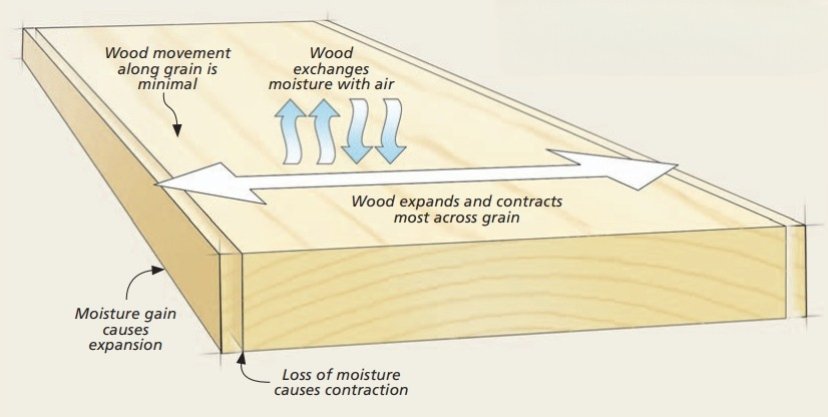
To master preventing wood expansion and contraction, our engineers analyze the anisotropic properties of timber. Wood does not expand equally in all directions. As shown in the diagram above, timber moves significantly across its width (tangentially and radially) but experiences virtually zero dimensional change along its length (longitudinally).
If a factory rigid-glues or screws two pieces of solid wood together with opposing grain directions, the cross-grain tension will eventually tear the fibers apart as the climate shifts. This structural stress is dictated by the Equilibrium Moisture Content (EMC)—the point where the moisture inside the wood matches the humidity of the surrounding air. Indonesia’s tropical EMC sits around 15% to 18%, while a winter-heated home in Chicago or Berlin drops to an EMC of 6% to 8%.
2. Solution 1: Precision Kiln-Drying to Lock the Cellular Foundation
The absolute first line of defense against wood movement happens inside our state-of-the-art Kiln-Drying chambers. Rushing the timber through an unscientific drying process leaves pockets of free water trapped deep within the heartwood core.
At Tripoin Furniture, we use a computerized, slow-seasoning profile to dry our premium teak, mahogany, and mindi wood over several weeks. We bring the timber down to a strict, export-optimized moisture content of 8% to 12%. By removing the internal moisture uniformally before machining, we pre-shrink the lumber to its optimal baseline dimensions, dramatically minimizing its future movement when it reaches dry, northern hemisphere winters.
3. Solution 2: Implementing Breadboard Ends for Large Panels
For large solid wood expanses, such as a premium 3-meter teak dining table, the wood needs a structural frame that keeps the top perfectly flat while allowing it to expand and contract freely across its width.
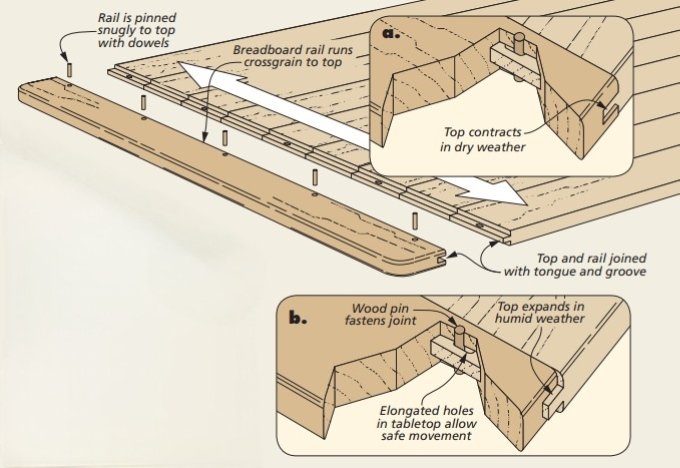
To achieve this, our master craftsmen utilize a traditional joinery technique called Breadboard Ends:
- The Mechanism: A narrow wooden cap is attached to the ends of the tabletop using a deep mortise-and-tenon joint.
- The Freedom: We do not glue the entire joint. Instead, the cap is held in place by wooden dowels driven through elongated, oval slots inside the tenon. When the main tabletop expands or contracts sideways during seasonal humidity changes, the wood slides smoothly inside the breadboard cap without bowing or splitting open.
4. Solution 3: Right Construction
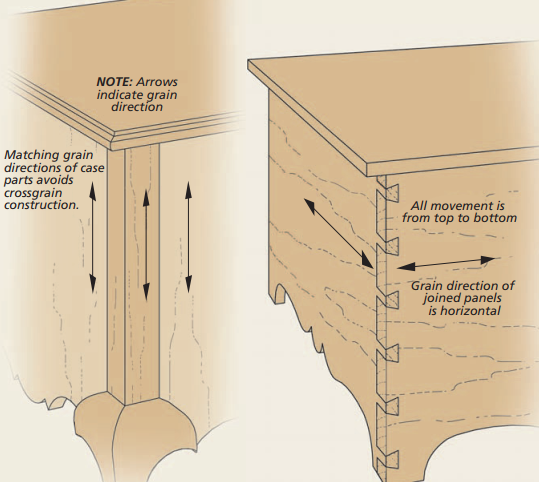
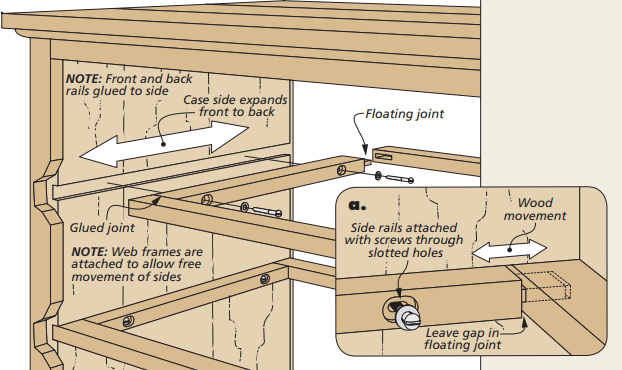
We have to understand a right construction to build the furniture to avoid any crackings when the wood moves. We have to understand the principle of joining the part that has movement with the rigid part.
5. Solution 4: Desktop Fasteners and Floating Joint Construction
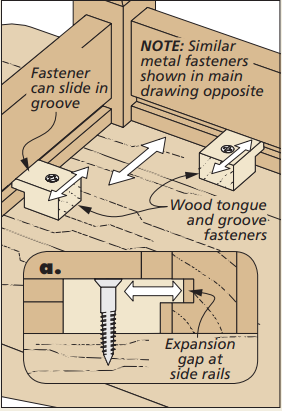
When attaching a solid wood tabletop or sideboard frame to a rigid base (whether a wooden apron or a heavy industrial steel chassis), driving standard screws directly through the frame is a recipe for disaster. The expanding wood will break the screws or crack the tabletop.
Our engineering team enforces a strict floating joint construction B2B protocol:
- Z-Fasteners & Figure-Eight Clips: We secure tabletops using mechanical steel clips that sit inside routed grooves along the inner frame. These clips act as flexible hinges; they hold the top down securely but pivot or slide back and forth when the wood expands sideways.
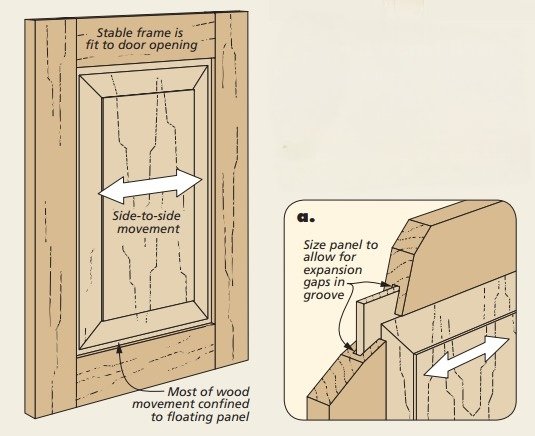
- Floating Panels: For wardrobe doors and cabinetry sidings, we utilize a frame-and-panel system. The center wood panel sits loosely inside a deeply grooved perimeter frame, allowing the panel to grow and shrink silently hidden behind the decorative border.
Conclusion: Engineered Excellence for Ultimate Peace of Mind
Wood movement is a natural law of physics. A cheap factory ignores it, resulting in costly international product returns. An elite manufacturer embraces it, utilizing advanced joinery, flexible fasteners, and scientific kiln-drying to absorb the movement seamlessly within the design itself.
When you source your custom lines from Tripoin Furniture, you gain the assurance that every joint, panel, and tabletop is mathematically and structurally optimized to withstand the test of global climates.
Are you reviewing your current CAD blueprints or product specifications to ensure climate resilience? Contact Tripoin Furniture today to consult with our structural engineers, review our joinery methodologies, and request an expert B2B production quote.
www.tripoinfurniture.com
Email : sales@tripoinfurniture.com