
The Gold Standard of Timber: Why Javanese Teak is the Best Teak Wood in the World

Title: The Gold Standard of Timber: Why Javanese Teak is the Best Teak Wood in the World

When it comes to luxury, longevity, and timeless elegance, teak wood (Tectona grandis) stands undefeated as the “King of Hardwoods”. From high-end yacht decks to breathtaking patio sets, its reputation precedes it. However, not all teak is created equal. While teak is native to a few countries in Southeast Asia, Javanese Teak Wood from Indonesia is widely celebrated by craftsmen and global designers as the absolute gold standard for premium furniture making.
At Tripoin Furniture, we believe that masterful craftsmanship deserves the finest raw materials. In this article, we delve deep into the science, geography, and history behind why Javanese teak reigns supreme on the global stage.
The Secret Behind the Superiority: Java’s Unique Terroir
What makes one tree stronger than another? The answer lies beneath the surface. The island of Java, Indonesia, possesses a unique combination of natural elements—often referred to as the ideal terroir—that cannot be replicated elsewhere:
- Mineral-Rich Volcanic Soil: Java is home to a chain of active and dormant volcanoes. Over millennia, volcanic eruptions have enriched the soil with dense minerals, providing the perfect nourishment for teak roots.
- The Slow Growth Cycle: Java’s climate features highly pronounced wet and dry seasons. These environmental fluctuations naturally stress the trees, forcing them to grow slowly. This slow maturation allows the wood to develop an exceptionally tight grain pattern and maximum density, far superior to fast-grown plantation teak from other parts of the world.
Why Javanese Teak is the Ultimate Choice for Furniture
The meticulous, decades-long growth process translates into physical properties that make Javanese teak a marvel of nature:

1. High Natural Oil and Silica Content
Javanese teak naturally accumulates rich reserves of internal oils and silica. The oil acts as a built-in waterproof barrier, protecting the furniture from warping, cracking, and rotting even when exposed to harsh outdoor weather. Meanwhile, the silica content shields the timber from wood-boring insects, termites, and fungal decay.
2. Unmatched Durability and Hardness
With a high ranking on the Janka hardness scale, mature Javanese teak boasts incredible tensile strength. It handles daily wear and tear effortlessly, making it the perfect heirloom material that can be passed down through generations.
3. Timeless Aesthetic Appeal
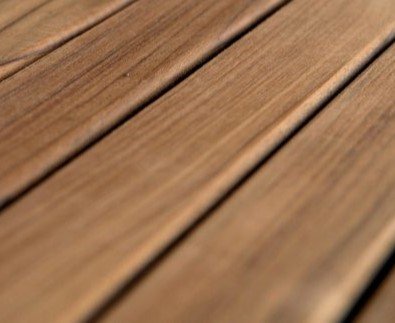
Visually, Javanese teak is stunning. It features a deep, warm golden-brown heartwood paired with beautiful, consistent, and intricate linear grain patterns. As it ages outdoors, it gracefully develops a sophisticated silvery-gray patina that gives it a luxurious, rustic charm.
Strict Sustainability and Legal Verification
Premium quality means nothing without ethical sourcing. In Indonesia, the teak industry is highly regulated to fight deforestation and promote eco-friendly practices:
- Perum Perhutani Management: The majority of high-quality Javanese teak plantations are stringently managed by Perum Perhutani, a state-owned forestry enterprise that enforces selective logging—ensuring that for every mature tree harvested, new ones are planted.
- SVLK Certification: Every piece of wood used at Tripoin Furniture complies with the SVLK (Indonesian Timber Legality Assurance System). This globally recognized certification guarantees that the wood is 100% legally logged, traceable, and sustainably harvested.
Head-to-Head: How Javanese Teak Outperforms Global Competitors
To truly understand why Javanese teak is highly coveted, we must look at how it stacks up against teak wood from other countries. While Tectona grandis grows in several tropical regions, the quality varies drastically based on the country of origin, regulations, and harvesting methods.
Here is how Javanese teak compares to its top global competitors:
| Feature | Javanese Teak (Indonesia) | Burmese Teak (Myanmar) | African & Latin American Teak |
| Grain Density | Extremely Tight & Consistent (due to Java’s distinct seasonal cycles) | Tight (Old-growth forest) | Loose to Medium (Fast-grown plantation) |
| Oil & Silica Level | Very High (Excellent natural weather resistance) | High | Low to Moderate |
| Sustainability & Law | 100% Sustainable & Verified via SVLK & Perum Perhutani | Highly Problematic (Trade bans & conflict timber issues) | Sustainable, but younger trees |
| Best Used For | Luxury Indoor & Premium Outdoor Furniture | Marine/Yacht decking | Budget-friendly indoor furniture |
3 Major Advantages of Javanese Teak Over Other Countries
1. Javanese Teak vs. Burmese Teak (Myanmar): The Ethical & Legal Superiority
Historically, Burmese teak from old-growth natural forests was considered a strong competitor due to its high oil content. However, the modern market has shifted drastically for two critical reasons:
- The Conflict Timber Issue: Due to political instability, the international community (including the US and EU) has placed strict sanctions and trade bans on Burmese teak. Buying it often carries massive legal and ethical risks.
- The Indonesian Advantage: Javanese teak offers the exact same premium durability and rich golden hue, but it is 100% legal and conflict-free. With Indonesia’s rigid SVLK certification, international buyers can import furniture from Tripoin Furniture with absolute peace of mind.
2. Javanese Teak vs. African & Latin American Teak: Density and Oil Maturity
In recent decades, countries in Africa (like Ghana) and Latin America (like Costa Rica) started rapidly growing teak on commercial plantations.
- The Fast-Growth Flaw: Due to constant tropical rainfall and different soil profiles, teak in these regions grows too quickly. While it sounds efficient, fast growth results in a wider, looser wood grain, softer texture, and significantly lower natural oil content.
- The Javanese Advantage: Java’s volcanic soil and strict Perum Perhutani harvesting cycle ensure that trees are only logged when they reach peak maturity (often 30 to 50+ years old). This gives Javanese teak its signature rock-hard density and superior water-resistant oils that younger African or Latin American teak simply cannot match.
3. Javanese Teak vs. Indian Teak: Commercial Availability
India has beautiful domestic teak (such as Malabar teak), but it is heavily restricted.
- The Supply Deficit: India consumes almost all of its own teak domestically and actually relies on heavy imports to meet its furniture needs. It is virtually unavailable for sustainable commercial furniture export.
- The Javanese Advantage: Indonesia has perfected the balance between strictly controlled conservation and a thriving, highly reliable export infrastructure, making Javanese teak the most accessible premium wood for global luxury markets.
Conclusion: An Investment in Excellence
Choosing furniture is more than just styling a room; it is an investment in long-term value, comfort, and sustainability. By utilizing the natural perfection of Javanese teak wood, Tripoin Furniture transforms raw, legendary timber into masterfully crafted focal points for your indoor and outdoor spaces.. When you purchase a piece of Javanese teak furniture, you aren’t just buying wood—you are bringing home a piece of the earth’s finest craftsmanship.
TRIPOIN FURNITURE
Email : sales@tripoinfurniture.com