

Title: Understanding the Different Types of Composite Wood: A Technical B2B Guide
In the modern furniture manufacturing and commercial construction industries, natural solid timber is no longer the sole material utilized for high-performing designs. To achieve absolute dimensional stability, reduce production costs, and maintain structural consistency across massive production volumes, global brands heavily rely on wood composite materials.
Also known as engineered wood, man-made boards, or manufacturing panels, composite wood refers to a broad family of products engineered by binding wood strands, fibers, veneers, or scrap particles together with industrial adhesives or polymers under high heat and pressure.
However, because each type of composite wood is engineered differently, they possess radically distinct mechanical properties. Utilizing the wrong substrate can lead to structural failure, sagging, or severe moisture rot.
To help your procurement team select the perfect material for your catalog, Tripoin Furniture provides this comprehensive breakdown of the primary types of composite wood available in the global market.
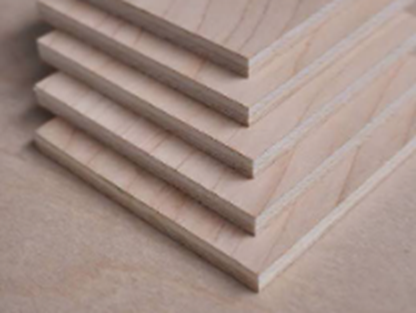
1. Plywood (Veneer-Based Composite)
Plywood—frequently referred to as Multiplek in Southeast Asia—is the undisputed structural king of the B2B commercial panel boards sector. It is manufactured by layering thin sheets of wood veneer (plies) on top of each other, alternating the grain direction by 90 degrees for each layer.
- Key Properties: The cross-laminated grain structure gives plywood immense structural strength-to-weight ratios, uniform dimensional stability, and incredible resistance to splitting or warping. It also boasts the highest screw-holding capacity among wood-based composites.
- Best Applications: Premium kitchen cabinet carcasses, heavy-duty sofa frameworks, architectural wall paneling, and luxury custom hospitality cabinetry linings.
2. Blockboard
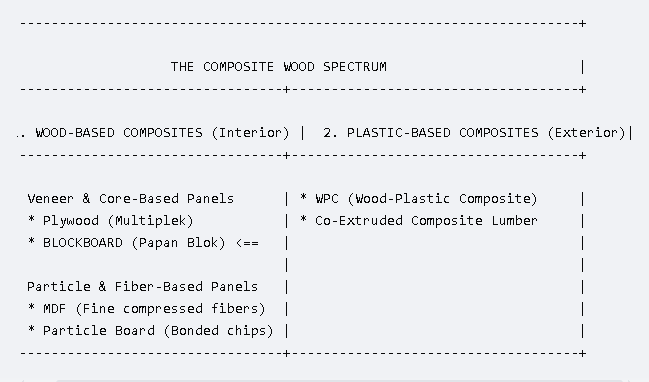
Blockboard is a highly stable, lightweight engineered wood panel classified under the Wood-Based Composite spectrum. Specifically engineered for premium indoor interior applications, blockboard features a unique hybrid construction that bridges the gap between natural solid timber and composite sheet materials. It is highly prized by global furniture brands and hospitality contract procurement managers for its exceptional resistance to bending and superb cost-efficiency.
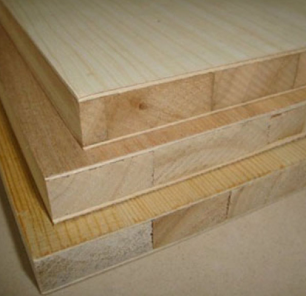
- Key properties: The Solid-Block Core: The interior matrix consists of structural, kiln-dried softwood battens (typically Albasia, Falcata, or Pine) measuring 20mm to 30mm wide. These solid timber strips are placed edge-to-edge and bonded tightly under high pressure.The Face & Back Veneers: This solid-block core is then sandwiched between two layers of high-grade wood veneers (such as engineered hardwood or natural premium timber veneers) glued with industrial-grade resins, grain-oriented perpendicularly to the core blocks to prevent dimensional warping.
- Best Applications: Long Wardrobe Doors: Preventing tall cabinet doors from warping or putting excessive strain on vertical hinges.Extended Shelving Units: Long-span bookshelves, display units, and walk-in closet structures that require high resistance to sagging.Premium Interior Casegoods: Cabinet backing panels, interior partitions, and hidden framing elements for upscale hospitality furniture suites.
3. Medium-Density Fiberboard (MDF)
MDF is an engineered substrate produced by breaking down solid wood residuals into ultra-fine wood fibers. These fibers are blended with synthetic resin binders and consolidated into dense, uniform sheets under intense heat.
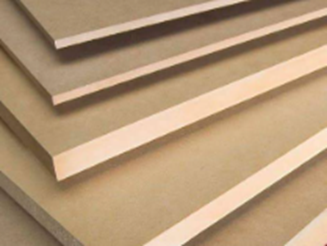
- Key Properties: MDF features a completely homogeneous structure with no grain patterns, knots, or internal voids. Its surface is perfectly flat and dense, allowing for flawless precision CNC routing and milling. However, raw MDF is highly hygroscopic and will swell and degrade rapidly if exposed to direct water.
- Best Applications: Intricate hotel wardrobe doors, contemporary painted indoor furniture surfaces, decorative wall moldings, and display cabinets that require high-gloss or matte lacquer finishes.
4. Particle Board (Chipboard)
Particle board is an economical composite option made from wood chips, sawmill shavings, and sawdust bound together by synthetic resin glues and pressed into large sheets.
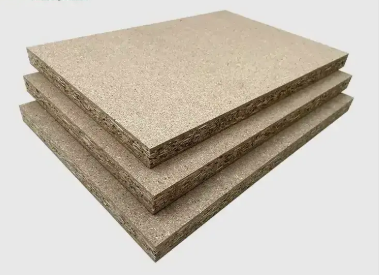
- Key Properties: It is the lightest and least dense of the primary panel products. While it provides excellent flatness and stability in low-humidity environments, it has lower load-bearing strength over long spans and a weak edge profile that can crumble if subjected to raw moisture or excessive stress.
- Best Applications: High-volume ready-to-assemble (RTA) flatpack office furniture, internal shelving segments, and budget residential casegoods—typically laminated with melamine paper or natural wood veneers to enhance durability.
5. Wood-Plastic Composite (WPC)
WPC represents a revolutionary modern hybrid in the composite family. Instead of using organic resins to bind wood particles, WPC blends recycled wood flour or wood fibers directly with molten thermoplastics (such as PE, PP, or PVC) alongside specialized UV stabilizers.
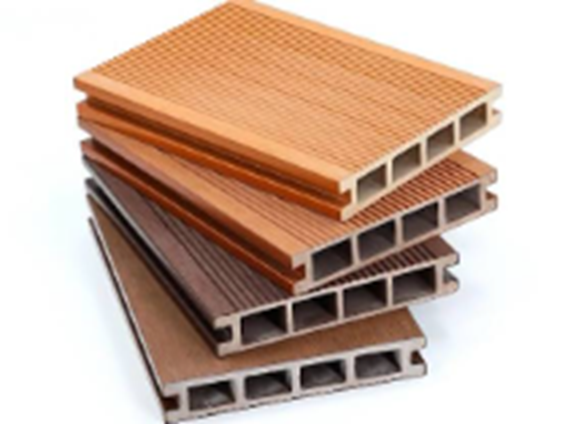
- Key Properties: Because the wood particles are completely encapsulated by polymers, WPC is 100% waterproof, rot-proof, and insect-proof. It does not warp, crack, or splinter, and it requires zero seasonal maintenance (no sanding, staining, or oiling).
- Best Applications: Luxury resort outdoor decking, commercial pool walkways, open-air restaurant fencing, architectural exterior cladding, and outdoor contract furniture frames.
6. Oriented Strand Board (OSB) & Laminated Veneer Lumber (LVL)
Mainly used in heavy structural contracting rather than fine furniture, these materials utilize unique wood orientations:
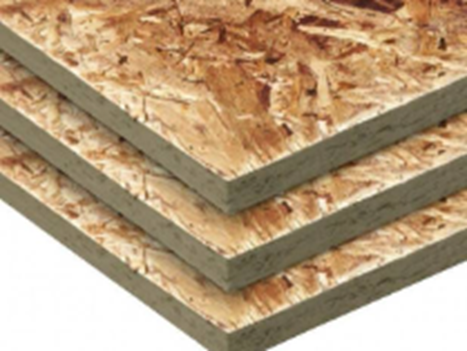
- OSB: Made from large, thin wood strands placed in cross-oriented layers. It is highly rigid and widely used for structural wall sheathing and subfloors.
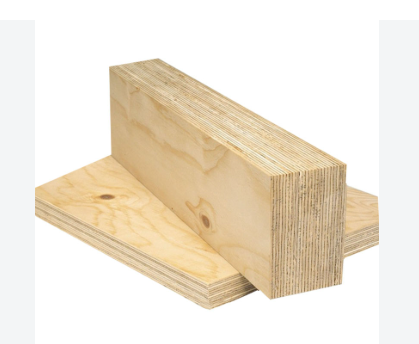
- LVL: Created by bonding multiple layers of thin wood veneers with all the grain running in the parallel direction, maximizing its load-bearing capacity as structural beams and headers.
Conclusion: Consolidate Your Material Sourcing with Tripoin Furniture
Every composite wood material serves a distinct operational purpose. Balancing the organic warmth of solid Indonesian hardwoods with the engineering consistency of advanced composite substrates allows your brand to maximize furniture longevity while optimizing your project budgets.
At Tripoin Furniture, we help global B2B buyers integrate the perfect material mix for their proprietary lines. Whether your upcoming hotel project requires certified solid teak, high-density plywood cabinetry, or weatherproof exterior WPC components, our Jepara manufacturing facility delivers precision execution.
Are you compiling material specifications for an upcoming furniture collection or commercial resort development? Contact Tripoin Furniture today to consult with our industrial design engineers, inspect our physical material matrix, and request an expert production quote.
Email : sales@tripoinfurniture.com