

Title: Identifying and Preventing Common Wood Defects in Furniture Manufacturing
When sourcing solid timber furniture from an international factory, understanding raw material quality is your best line of defense against product failure. Wood is an organic, anisotropic material—meaning its physical properties differ along different axes. Because it breathes and reacts dynamically to its environment, it is naturally prone to various structural and visual irregularities.
In the global B2B market, delivering a shipment containing undetected wood defects in furniture manufacturing can ruin a brand’s reputation. A table that looks perfect in a tropical factory can split, warp, or collapse within weeks of arriving in a dry, heated winter environment overseas.
To help your procurement team conduct flawless inspections, Tripoin Furniture has compiled this professional guide to understanding common timber defects and how to enforce furniture defect prevention successfully.
+————————————————————————-+
| COMMON WOOD DEFECTS TYPOLOGY |
+————————————+————————————+
| NATURAL DEFECTS | KILN / SEASONING DEFECTS |
+————————————+————————————+
| 1. Sapwood Intermix (Grade C) | 1. End Checking (Surface Cracks) |
| 2. Dead/Unstable Knots | 2. Cupping & Bowing (Warping) |
| 3. Insect Boreholes (Pinholes) | 3. Honeycombing (Internal Splits) |
+————————————+————————————+
1. Natural Growth Defects: What to Reject at the Timber Yard
Natural defects occur while the tree is still growing in the forest. While some minor natural variations give solid wood its unique character, major structural flaws must be strictly rejected during raw material grading:
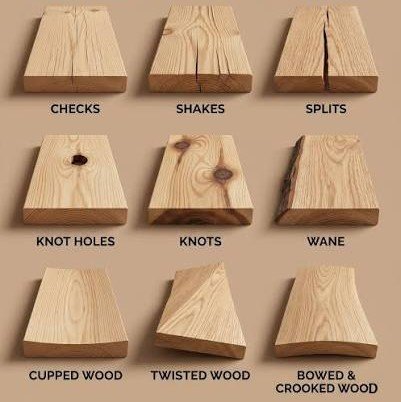
- Unstable or Dead Knots: Knots are the bases of old tree branches that became embedded in the trunk. “Live knots” are structurally sound, but “dead knots” are surrounded by dark, decayed rings. Over time, dead knots will loosen, dry up, and completely fall out of the wood panel, leaving an unacceptable hole in your furniture.
- Sapwood Intrusion (In Outdoor Lines): Sapwood is the living, outer ring of the tree trunk. It is soft, cream-colored, and contains virtually no natural protective oils. If a factory uses sapwood for outdoor furniture, that specific section will rot, warp, and attract termites rapidly when exposed to rain.
- Insect Boreholes (Pinholes): Tiny holes caused by wood-boring beetles or powder-post termites during the tree’s life. Any log showing active or extensive infestation must be quarantined and treated immediately.
2. Seasoning & Kiln-Drying Defects: The Results of Rushed Production
Seasoning defects happen after the log is harvested. They are almost entirely caused by an incorrect, unscientific, or rushed drying process. This is where low-cost factories frequently fail.
- Checking and Splitting (Surface Cracks): If a factory cranks up the heat inside a drying kiln too fast, the outer surface of the wood dries and shrinks rapidly while the interior core remains wet. This extreme internal stress causes the surface fibers to rupture, creating deep cracks (checks) along the wood grain.
- Warping (Cupping, Bowing, and Twisting): Warping occurs when different parts of a wood board dry at unequal rates, causing the flat timber to bend. A cupped dining tabletop or a bowed chair leg makes the furniture completely unusable and structurally unstable.
- Honeycombing: This is a hidden, dangerous defect. It occurs when the interior core of the timber splits open while the exterior surface appears completely normal and intact. It drastically hollows out the structural strength of table legs and main support frames.
3. How Tripoin Furniture Achieves Zero-Defect Manufacturing
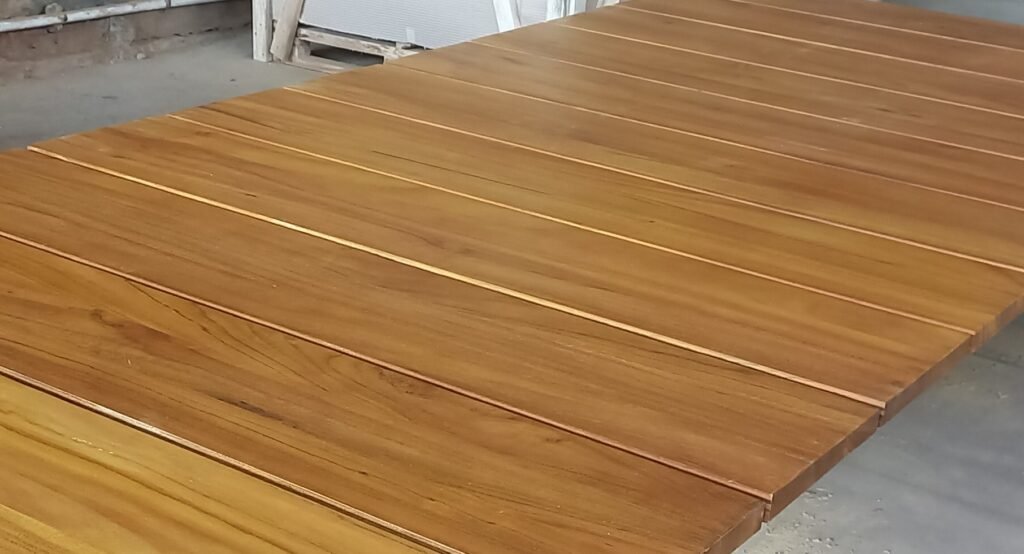
At Tripoin Furniture, we do not leave timber stability to chance. Our Indonesian hardwood quality control protocols are engineered to eliminate both natural and seasoning defects before the wood ever reaches the assembly line:
- Strict Heartwood Grading: For our export-grade outdoor collections, we enforce a strict zero-sapwood policy. Our inspectors manually cross-examine every wood board to ensure only mature, tight-grained heartwood is utilized.
- Computerized Slow-Kiln Seasoning: We reject accelerated drying methods. Our advanced kiln chambers operate on a highly precise, multi-week software schedule tailored to the exact density of Indonesian Teak and Mahogany. We extract moisture slowly and uniformly, bringing the wood down to a perfectly stable 8% to 12% moisture content (MC) without triggering structural stress or checking.
- Manual De-Knotting and Plugging: If a premium wood board contains a minor, stable knot that alters the aesthetic flow, our master craftsmen carefully drill out the anomaly and insert a custom-carved wood plug matching the exact grain pattern and color direction of the surrounding surface, maintaining absolute structural integrity.
Conclusion: Predictable Quality for Your Brand
Sourcing solid wood furniture internationally requires a manufacturing partner that understands the physics of timber. By identifying raw material flaws early and utilizing scientific kiln-drying workflows, we protect your business from the financial liabilities of defective imports.
Are you preparing a strict quality specification document or an audit sheet for your next custom furniture line? Contact Tripoin Furniture today to consult with our wood engineering experts, view our raw material standards, and receive a professional B2B quote.
TRIPOIN FURNITURE
Email : sales@tripoinfurniture.com