
GUIDE TO SELECTING GRADE A TEAK WOOD QUALITY BASED ON LOCATION (ORIGIN IN INDONESIA)

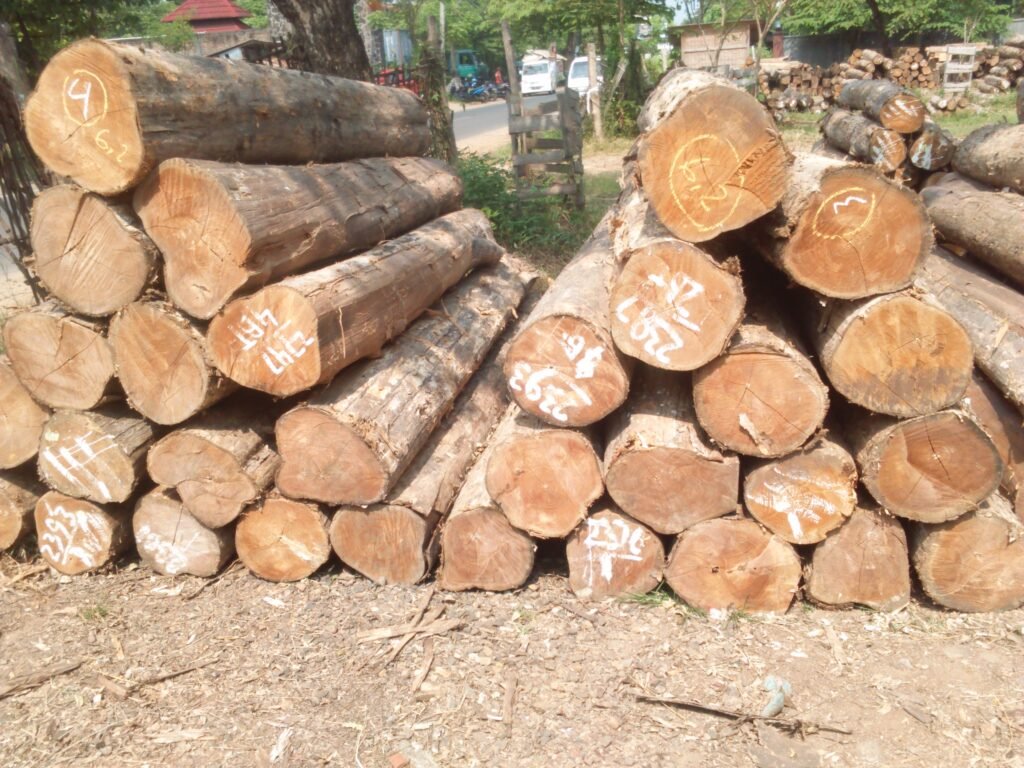
GUIDE TO SELECTING GRADE A TEAK WOOD QUALITY BASED ON LOCATION (ORIGIN IN INDONESIA)
We often hear the term “Grade A” teak wood, but what are the characteristics that define this classification? Based on my professional experience in the furniture industry and knowledge gathered from various sources, teak wood quality can be categorized by:
- Growing location
- Wood species
- Management/Forestry practices
- Size and anatomy, etc.
In this guide, I will focus on teak as a raw material commonly used in furniture based on its origin and management. (In a future session, I will provide a guide for Mahogany).
Teak is classified as Grade A based on its growing location because geographical factors, soil type, and climate significantly affect grain density, natural oil content, and the tree’s age. Generally, Grade A teak originates from limestone or dry soil, which results in slow growth but produces wood that is exceptionally dense and hard.
TEAK WOOD (Tectona grandis)
General Characteristics:
- Color: The heartwood ranges from golden-yellowish brown to reddish-brown, easily distinguished from the sapwood, which is grayish-white.
- Pattern: Beautifully decorative due to distinct growth rings; slightly dull and oily.
- Texture: Moderately coarse to coarse and uneven.
- Grain Direction: Straight, wavy, to slightly interlocked.
- Growth Rings: Very visible in cross, radial, and tangential sections.
- Hardness: Moderately hard.
Anatomical Features:
- Pores: Ring-porous; round to oval. The diameter in earlywood is approximately 340-370 microns, and in latewood, 50-290 microns. Simple perforation plates containing tyloses or white deposits.
- Parenchyma: Paratracheal type (thin sheath-like, wider in earlywood forming marginal bands); Apotracheal type is rare.
- Rays: Wide, consisting of 4 or more series, 4-7 per mm, tangential direction, homocellular (only procumbent cells), up to 0.9 mm high.
Properties and Uses:
- Specific Gravity: Average 0.67 (0.62 – 0.75).
- Durability Class: I-II; Strength Class: II.
- Uses: Construction, door/window frames, door panels, railway sleepers, household furniture, truck bodies, ship decks, wall paneling (lumber siring), and decorative veneers.
DETERMINING GRADE A QUALITY
Grade A teak is the highest quality, taken from the heartwood (core) of old teak trees (usually over 40-50 years old). To produce tight grain, uniform honey color, and high natural oil content, specific environmental conditions are required:
- Tropical Monsoon Climate: Teak grows optimally where there is a clear distinction between wet and dry seasons. The dry season is crucial for creating tight growth rings and maximum wood density.
- Ideal Rainfall: Between 1,250 mm and 3,750 mm annually. Excessive rain prevents optimal heartwood oil formation.
- Elevation: Thrives from lowlands up to 1,200 meters above sea level (masl), but the best quality is found below 500 masl.
- Soil Conditions: Excellent drainage is mandatory. It thrives in fertile volcanic soil, sandy soil, or limestone-rich soil with a neutral pH (6-7).
TECHNICAL SPECIFICATION SHEET: INDONESIAN TEAK WOOD (GRADE A)
1. General Identification
- Botanical Name: Tectona grandis L.f.
- Commercial Name: Indonesian Teak / Jati Jawa.
- Grade Classification: Grade A (100% Mature Heartwood).
- Origin: Central Java & East Java, Indonesia (Perum Perhutani Managed Forests).
2. Physical Properties
- Density / Specific Gravity: Average 0.67 (Range: 0.62 – 0.75).
- Hardness: Moderately Hard (Janka scale equivalent for mature heartwood).
- Color: Uniform golden-brown to dark honey-brown heartwood.
- Oil Content: High natural teak oil (provides self-lubricating properties and water resistance).
- Texture: Coarse to moderately coarse with an oily feel.
3. Mechanical & Durability Properties
- Durability Class: Class I – II (Highly resistant to decay, fungi, and termites).
- Strength Class: Class II (Suitable for heavy structural load and high-end furniture).
- Grain Profile: Primarily straight; occasional wavy or interlocked grain (Decorative Grade).
- Stability: High dimensional stability; low shrinkage ratio after proper kiln-drying.
4. Anatomical Specifications
- Growth Rings: Distinct and visible across all sections; tight rings due to slow growth in limestone soil.
- Vessels/Pores: Ring-porous arrangement.
- Earlywood diameter: 340 – 370 microns.
- Latewood diameter: 50 – 290 microns.
- Inclusions: Presence of Tyloses and white mineral deposits (Calcium phosphate), which contribute to its extreme durability.
- Parenchyma: Paratracheal (vasicentric/marginal bands).
5. Sourcing & Quality Standards
- Minimum Tree Age: 40 – 50 years.
- Harvesting Source: Government-regulated plantations (TPK Perhutani).
- Topographic Origin: Lowland limestone regions (<500 meters above sea level) for maximum mineral density.
- Primary Harvest Locations: Blora, Cepu, Bojonegoro, Ngawi, and Pacitan.
6. Recommended Applications
- Outdoor: Marine decking, luxury yacht interiors, garden furniture, poolside decking.
- Indoor: Premium solid wood furniture, high-end flooring, door panels, and structural frames.
- Industrial: Chemical vats, bridge building, and railway sleepers.
GRADE A QUALITY BY LOCATION
- Perhutani Teak (Central & East Java) – The Gold Standard
Forests managed by Perum Perhutani in Central and East Java are considered the producers of the best Grade A teak in Indonesia.- Key Regions: Blora, Cepu, Randublatung, Bojonegoro, Pacitan, and Gunung Kidul.
- Why Grade A? The limestone-rich soil slows growth, resulting in tight annual rings, straight grain, uniform golden-brown color, and high oil content (natural resistance to termites and weather).
- TPK Teak (Timber Depot)
Wood from Perhutani’s TPK (Tempat Penimbunan Kayu) has passed age selection (usually 30-40+ years) and diameter checks, ensuring it is true heartwood. - Teak Outside of Java (Kalimantan, Sulawesi, NTT)
While these regions produce high-quality wood, Java Teak (especially from Cepu/Bojonegoro) remains the most valued due to the harvesting age and specific soil conditions.
SUMMARY OF TOP PRODUCING REGIONS
- Blora, Central Java: Known as “Teak City,” producing the best export-quality wood.
- Cepu, Central Java: Produces “Super Gama” teak—highly durable with straight grains.
- Bojonegoro, East Java: Known for wood with high specific gravity, often used for traditional Joglo houses.
- Pacitan, East Java: Generally recognized for very high quality with Grade A potential if harvested from trees over 40-50 years old.